How to file a California Statement of Information online
Updated 2026-09-24
File a California Statement of Information through the Secretary of State's bizfile Online portal. Sign in, establish access to the entity, open its record, complete the statement, pay the filing fee and save the confirmation.
Check access before you start. Since August 1, 2026, the Secretary of State requires User Access for online SOI filings. If the filing option is missing, signing in or finding the company in search may not be enough. Follow the portal's access process. See the official filing tips.
This guide covers common California and registered out-of-state LLCs and stock corporations. Other entity types have different forms or rules.
What is a Statement of Information?
A Statement of Information, often called an SOI, updates the public record for a business. It identifies the company's addresses, people responsible for the business, agent for service of process and other required details.
The Secretary of State receives this filing. The Franchise Tax Board receives your state tax return and annual or minimum franchise tax. Completing one does not complete the other.
Check your form and filing window
| Entity | Common form | Initial filing | Subsequent filing | Standard filing fee |
|---|---|---|---|---|
| California or registered out-of-state LLC | LLC-12 | Within 90 days of registration or formation | Every two years, in the applicable filing window | $20 |
| California stock corporation or registered out-of-state corporation | SI-550 | Within 90 days of registration | Each year, in the applicable filing window | $25 |
The recurring filing window includes the registration month and the five preceding calendar months. For a biennial filing, check the applicable filing year as well as the month. Use the entity record and official instructions rather than counting forward from the date you last submitted a statement.
Sources: SOS forms and fees, filing-window table, and business entity FAQs.
Gather the information before opening the form
Have the legal name and entity number, business and mailing addresses, agent details, and a description of the business ready.
For a corporation, confirm the officers and directors that its form requires. For an LLC, confirm the managers or members and any other roles requested by the LLC form. Do not copy corporation officer requirements into an LLC filing.
Use actual appointments and company records. If you do not know who holds a required role, resolve that question before submitting. The form is not a place to assign an officer title just to clear a required field.
Step-by-step: How to file your SOI online
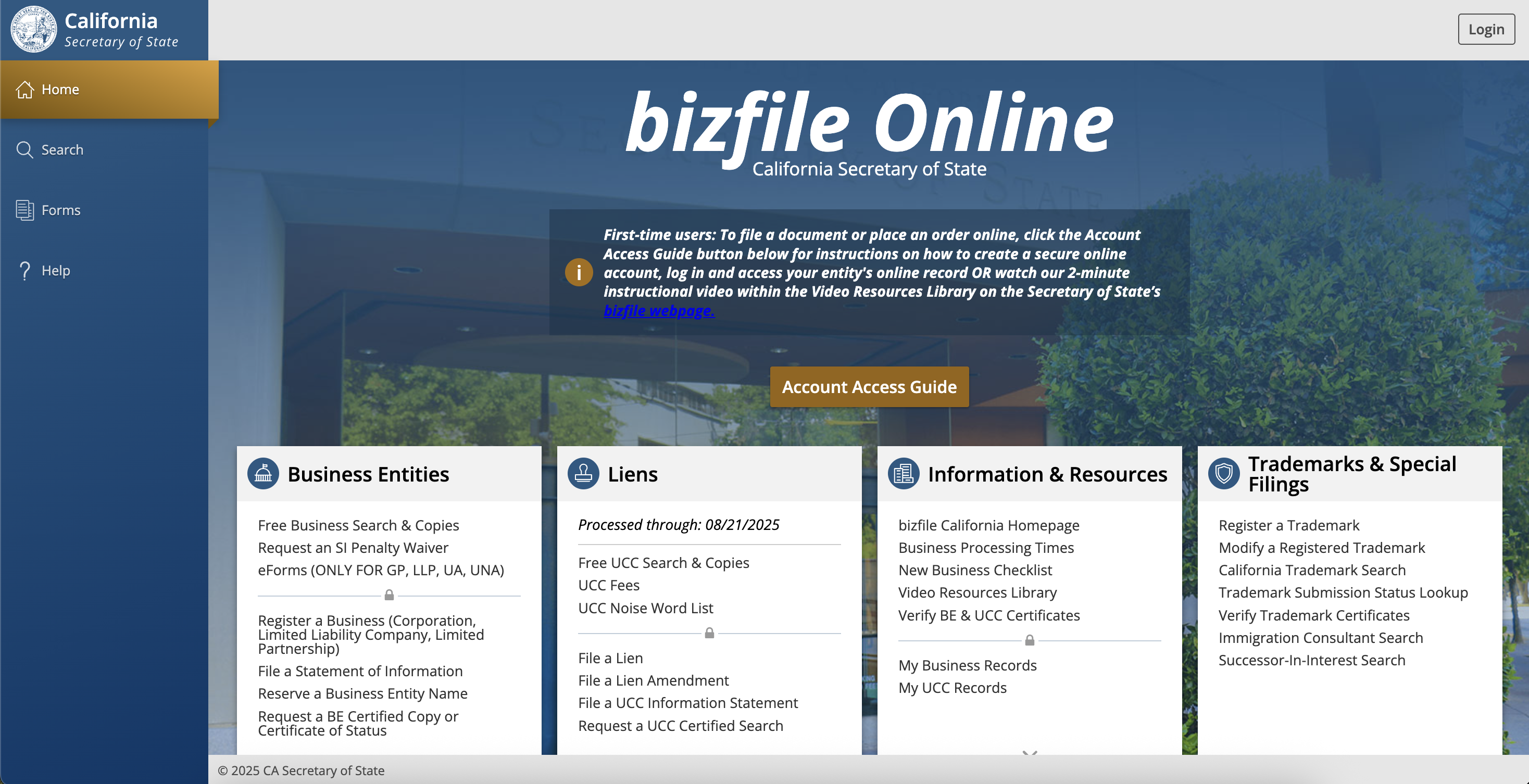
1. Open the official portal
Go directly to bizfile Online and sign in or create an account. A notice from a private filing service is not the official portal.
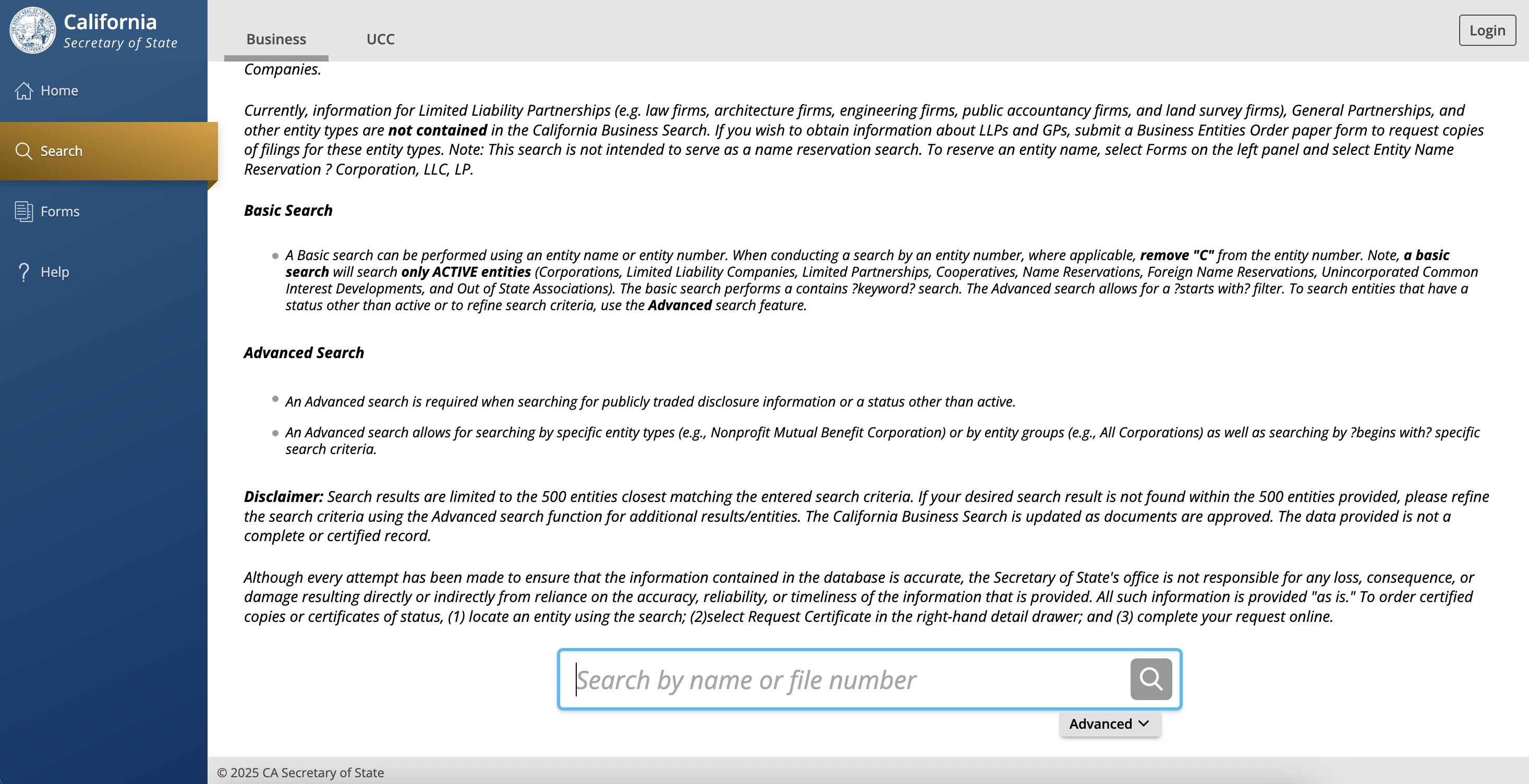
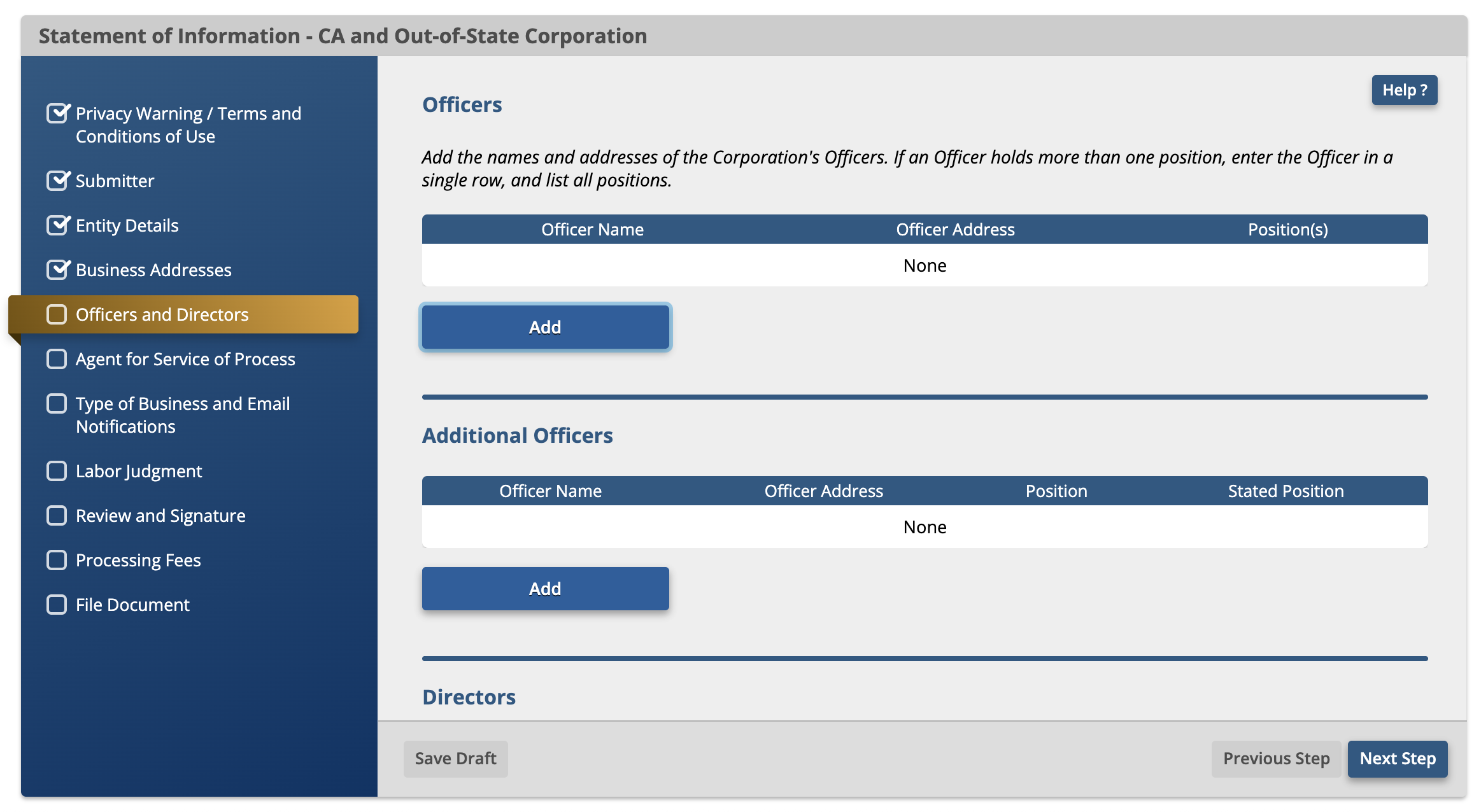
The screenshots below illustrate the existing walkthrough. Labels may differ as the portal changes; use the current SOS instructions and access controls.
2. Find the right entity
Search by entity number or legal name. Check the record against your formation documents, especially if several businesses have similar names.
3. Establish access and open the statement
Confirm that your account has User Access to the entity. If it does not, follow the portal's request-access flow. The SOS filing tips link to its access-control video.
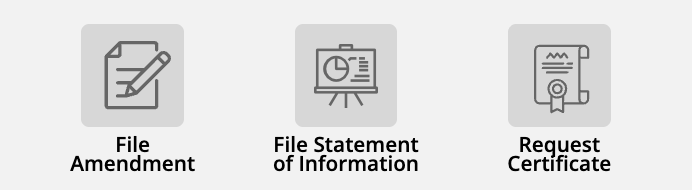
Once access is in place, open the entity's Statement of Information filing option. If the option remains unavailable, check the entity status and current SOS guidance before creating another account or paying a third party.
4. Complete and review the form
Use the form for your entity type. Check names, addresses, agent information and the people listed in each role against your records.
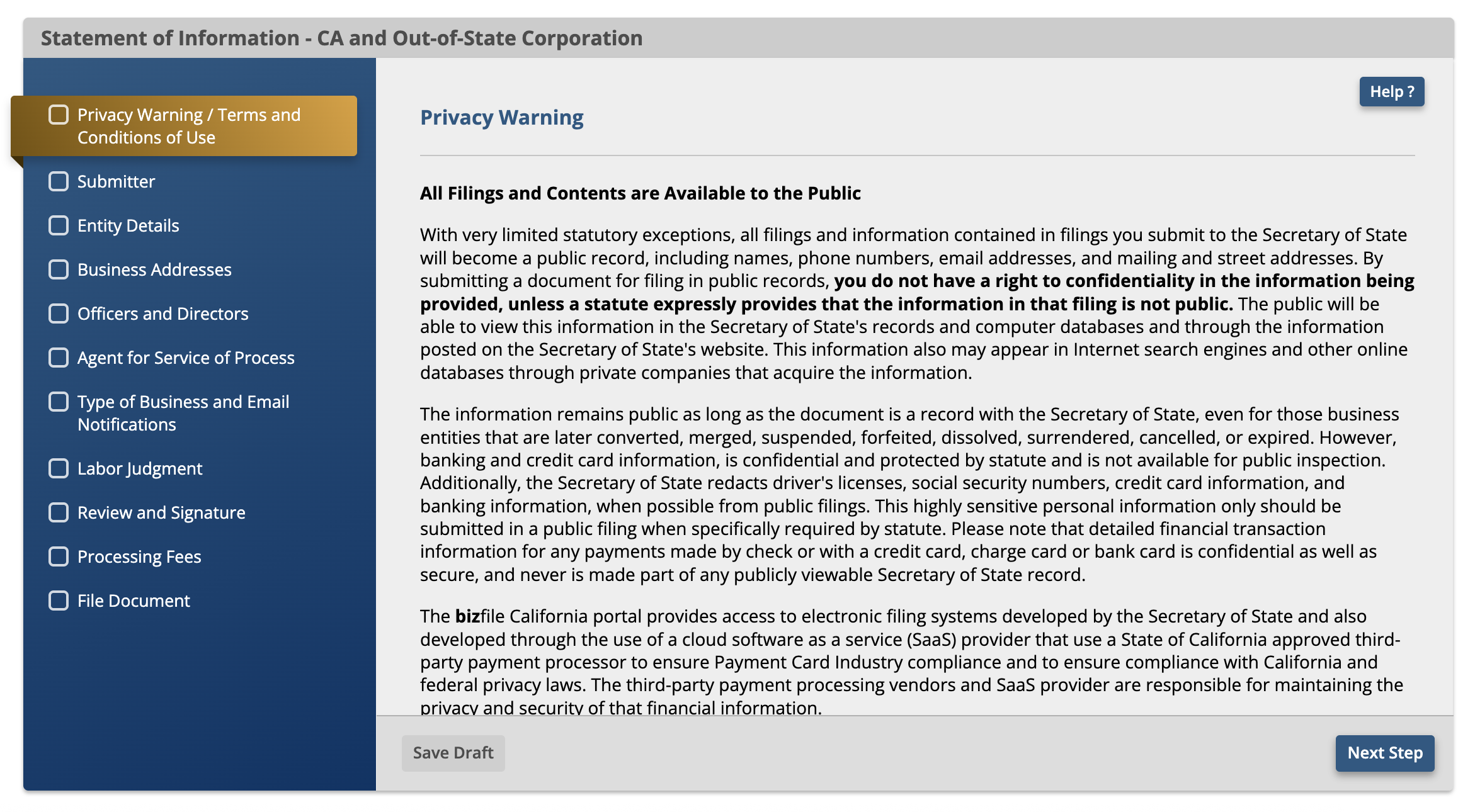
Review the full statement before submitting. A prior filing is useful as a reference, but it may contain information that has changed.
For a stock corporation, check the chief executive officer, secretary, and chief financial officer fields against the company's actual appointments. If one person holds more than one office, report each required office accurately. Do not assign a person to an office solely to get past a required field. LLCs use their own manager or member requirements; use the official form instructions for the selected entity.
5. Pay and save evidence of filing
Review the fee shown for the selected filing. Submit payment, then save the confirmation and filed statement when available. Confirm the filing appears in the entity's record.
Keep the filed copy with company records and set the next deadline using the statutory filing window.
Get guidance tailored to your business
If a filing does not go through
| Problem | What to check |
|---|---|
| No filing option appears | Account access to the entity, entity type and entity status |
| The form requires an unfamiliar role | Whether you selected the correct entity and form |
| The payment went through but the filing is unclear | Confirmation details and the entity's filing history before resubmitting |
| The statement shows old information | Whether you opened a saved draft or a previously filed document |
| The entity is suspended | Which agency imposed the suspension and what it requires for revival |
Penalties, waiver requests, and revival
The FTB lists an SOI penalty of $250 for businesses other than exempt organizations; the exempt-organization penalty is $50. The FTB collects the penalty on the SOS's behalf, and only the SOS can waive it. See the FTB penalty guidance.
To request relief, first make sure a statement is on file for the current period. Then use the SOS penalty-waiver form and explain the specific reason for the missed filing. A request does not establish approval; keep the response with the notice.
For a suspended entity, identify whether the SOS, FTB, or both require action. File the missing statement, resolve the SOS requirements, and complete the FTB revival process when the FTB also suspended the entity. Keep proof that each agency cleared its own requirement.
Common questions
Do I need to file if nothing changed?
Yes, a recurring filing can still be due. Use the no-change filing option when available and appropriate for your entity. Do not assume that unchanged details extend the deadline.
How do I update a statement between filing periods?
The SOS says to file an updated statement when information changes between statutory filing periods. Follow the instructions for your entity and filing type.
Can I search for or download an existing statement?
Use the official business search, open the correct entity and check its filing history. Access to records and authority to submit a new filing are different.
What happens if I miss the deadline?
The SOS can refer a missing filing for penalties and suspension or forfeiture. Read any notice to identify the agency and missing obligation. If the FTB has suspended the company, filing the SOI alone may not resolve the problem. Follow the FTB revival process.
Learn more about Afternoon
Seamlessly integrated financial stack, that handles your bookkeeping, taxes, and compliance.